
Dear Tacit,
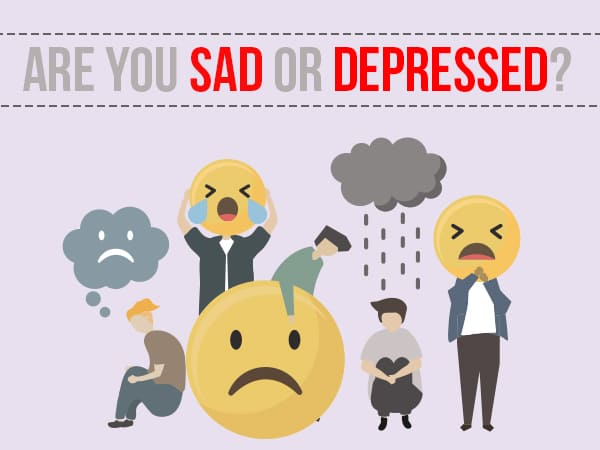
How do I know if I am depressed or just sad?
Signed: Got the Blues
Dear Got the Blues,
This is such a great question – and honestly, one that a lot of people wonder about. Let’s start with sadness.
Sadness is a normal human emotion – it impacts all of us and there is no way to avoid feeling it. Sadness is often triggered by something – like a loss, a disappointment, a memory that catches us off guard, or a change in our life. Sometimes we know exactly why we are sad, and sometimes we don’t. But one thing that tends to distinguish sadness from depression is that it is usually connected to something specific and tangible (even if we don’t always easily know what that is).
Sadness also tends to have what we call a discrete boundary – it has a beginning, a middle and, eventually, an ending. That ending doesn’t necessarily happen quickly. We can be sad for days, weeks or even longer following something significant (like grief, for example, which can make us sad for a considerable amount of time).
When we are sad, we can often still experience little moments of other emotions. We might laugh at something, enjoy a favourite meal, feel connected to a friend, get excited about something, or have a genuinely good afternoon – even if the sadness comes back later. That’s important.
Depression, on the other hand, tends to be more pervasive. It isn’t simply just about feeling “really” sad. In fact, some people experiencing depression don’t describe themselves as sad at all. They may feel numb, empty, hopeless, irritable, disconnected or like they simply don’t care about anything anymore.
One of the biggest clues to being depressed is the development of a loss of interest or pleasure. Things that normally feel good don’t feel good anymore. We stop wanting to see people, participate in activities, pursue hobbies or do things that used to matter to us. And it’s not just that we don’t feel like it today – that lack of interest begins to affect our everyday life.
Depression can also show up more in our bodies. Sleep patterns can change – we may sleep far more than usual or struggle to sleep at all. Our appetite can change. We may feel constantly exhausted, slowed down, restless or like even the simplest tasks require an enormous amount of effort.
Our thinking can change, too. Depression can make our thoughts much more negative and hopeless. We may become incredibly self-critical, feel worthless, have difficulty concentrating or start believing that things will never get better. It’s almost as though our brain begins filtering the world through a darker lens.
And this is where the distinction between feeling depressed and having a depressive disorder becomes important. People often use the word “depressed” to describe a really difficult emotional period – and that’s completely understandable. But experiencing a depressive period doesn’t automatically mean someone has a diagnosable Depressive Disorder. Being diagnosed with a Depressive Disorder requires the support of a mental health professional who looks at a number of things, including the symptoms someone is experiencing, how long they have been happening, how severe they are, and how much they are interfering with everyday functioning.
There can also be some overlap. A significant loss or difficult life experience can absolutely lead to depression. So, the fact that there is a “reason” for how we are feeling doesn’t automatically mean it is just sadness. Sometimes sadness becomes more complicated or persistent, and can change into a depression issue. That’s when getting some support can be particularly helpful.
I know it can get complicated. You don’t have to figure this out on your own. You don’t need to wait until you are completely unable to function before reaching out. If you’ve noticed that something has changed in you and you’re not quite feeling like yourself, that’s enough reason to talk to someone.
A counsellor, doctor, therapist or other trained professional can help you sort through what you’re experiencing. Sometimes the answer will be reassurance that you are going through a really tough time and what you are feeling makes perfect sense. Sometimes the answer will be that what you are experiencing is depression, and there can be some discussion about the different types of treatment that can help. And sometimes, the answer might be somewhere in between.
The most important thing to know is that sadness will pass and depression is treatable. Feeling this way does not mean you are broken, weak or destined to feel this way forever.
For some people, the best treatment for depression can include medication. It should also include counselling and some behavioural strategies, like exercise and movement, mindfulness, improving your sleep, maintaining social connections and learning ways to work differently with those negative thought patterns that develop. Often, a combination of approaches works best. (Very seldom will medication alone be a long-term solution to your depression issues.)
If you’re wondering if what you are dealing with is sadness or depression, don’t spend too much time trying to diagnose yourself. Pay attention to what has changed, how long it has been happening and how much it is affecting your life. Then reach out and talk to someone. And if you are experiencing thoughts about hurting yourself, suicide, or feeling that you don’t want to be here anymore, please reach out for immediate support rather than trying to manage those feelings alone. You deserve help with that, too.
Take care!
Do you have a question you would like us to address? Please feel free to reach out to us at counsellors@tacitknows.com. Your answer will be provided confidentially.
Do you need some counselling support or some Neurofeedback Training, to help you cope?
Make an Appointment Or contact us thru our email (counsellors@tacitknows.com) for more information.